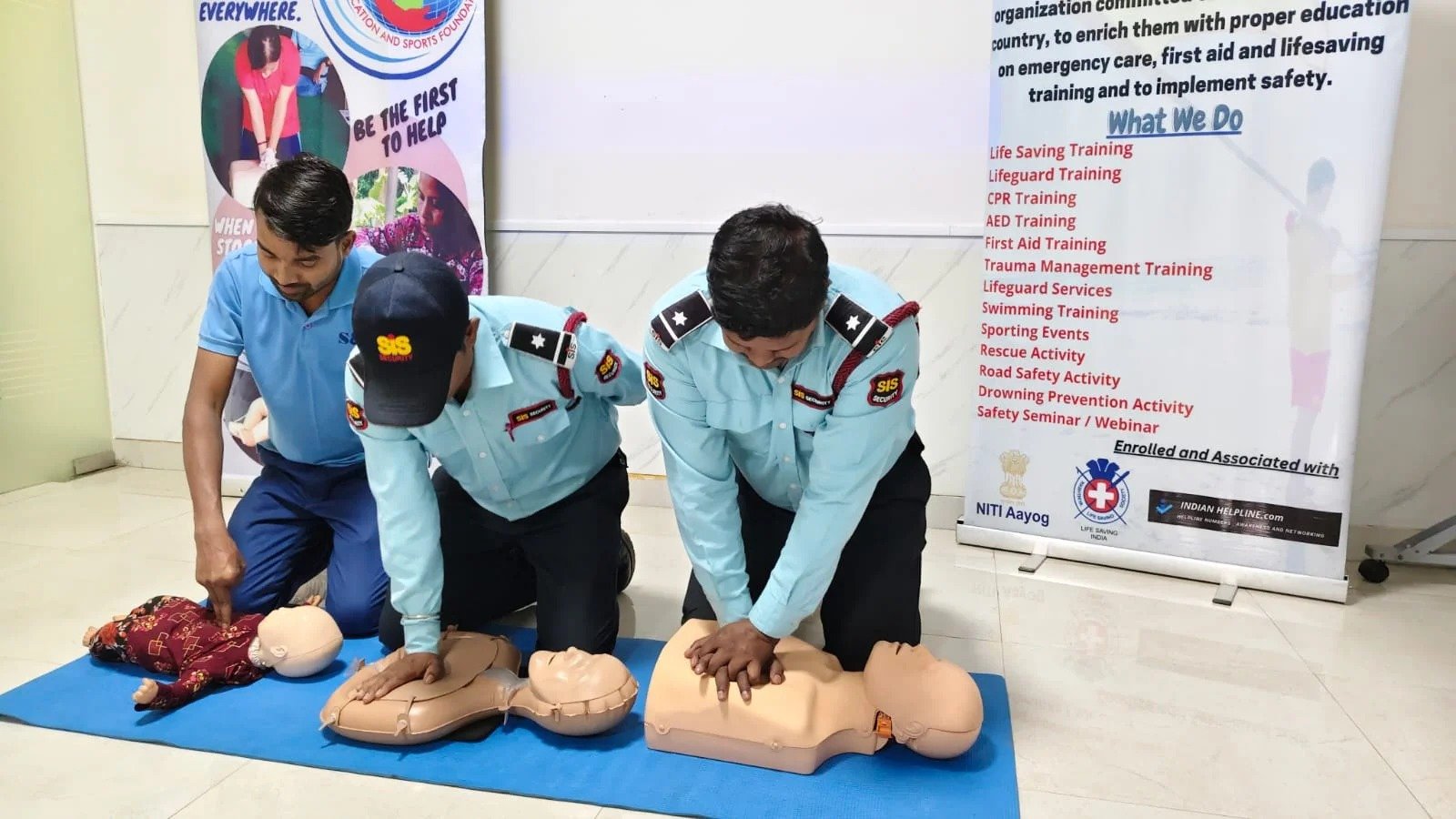
Learn to provide immediate care for injuries and medical emergencies before professional medical help arrives.
This course develops the practical first aid skills required to recognize common injuries and medical emergencies, assess casualties, control immediate dangers and provide safe care until professional medical assistance becomes available.
Participants learn first aid principles, primary assessment, bleeding control, burns care, fracture support, choking response, shock management, bandaging and common medical emergency procedures.
Check responsiveness, airway, breathing, circulation and immediate life-threatening conditions.
Apply direct pressure, dressings and safe bleeding-control methods.
Support fractures, burns and other injuries while preventing further harm.
Contact emergency services quickly and provide clear, accurate information.
By completing the program, participants will be able to manage common injuries, stabilize casualties and activate emergency services.
Provide appropriate first aid for bleeding, burns, fractures, choking and other common injuries.
Assess the casualty, prevent further harm and provide safe support until medical help arrives.
Contact professional responders quickly and provide clear information about the casualty and incident.
The curriculum combines first aid principles, casualty assessment, injury care, medical emergency response and practical bandaging skills.
Understand scene safety, consent, infection control, casualty care and the role of a first aider.
Check responsiveness, airway, breathing, circulation and immediate life-threatening conditions.
Manage external bleeding using direct pressure, dressings, bandages and safe positioning.
Recognize burn severity, cool the injury safely and protect the affected area from further damage.
Identify suspected fractures, support injured limbs and prevent unnecessary casualty movement.
Recognize mild and severe airway obstruction and provide appropriate choking assistance.
Recognize signs of shock, position the casualty safely and provide reassurance and monitoring.
Apply roller bandages, triangular bandages, slings and wound dressings correctly.
Respond to fainting, seizures, diabetic emergencies, breathing problems and other sudden illnesses.
Participants learn through instructor demonstrations, guided practice, casualty scenarios and hands-on first aid exercises.
Clear demonstrations of assessment, bleeding control, bandaging and injury care.
Supervised practice that develops safe, accurate and confident first aid skills.
Realistic scenarios that test recognition, decision-making and immediate casualty care.
Practice contacting emergency services and handing over accurate casualty information.
Join the Injury Stabilization Programs program or contact us for customized rescue and safety training for schools, clubs, institutions, workplaces and community groups.