A community awareness program designed to reduce drowning through education, prevention strategies and active public participation.
This program helps individuals, families and communities understand why drowning happens and how many incidents can be prevented through awareness, supervision, safer environments and appropriate emergency action.
Participants explore drowning statistics, major risk factors, child water safety, home and community prevention measures, safe rescue principles and basic emergency response procedures.
Understand common drowning risks, unsafe conditions and situations that require closer supervision.
Apply stronger supervision, barriers and safe routines to protect children around water.
Promote safer homes, public spaces and community participation in drowning prevention.
Recognize emergencies, raise the alarm and assist safely without becoming another casualty.
By completing the program, participants will understand drowning risks, promote water safety and respond more effectively during emergencies.
Recognize common risk factors, unsafe environments and behaviours that increase the chance of drowning.
Encourage supervision, barriers, safer swimming habits and community participation in prevention.
Recognize distress, raise the alarm and support a safe response until professional help arrives.
The curriculum combines drowning prevention education with risk awareness, child safety, community participation and emergency response guidance.
Understand the scale of drowning, common incident patterns and the importance of prevention.
Identify environmental, behavioural, supervision and personal factors that increase drowning risk.
Learn active supervision, safe routines, barriers and age-appropriate measures for protecting children.
Reduce hazards around tanks, ponds, pools, wells, rivers and other water sources in the community.
Use safer reaching and throwing options while avoiding direct contact and unnecessary personal risk.
Recognize distress, raise the alarm, contact responders and provide appropriate immediate support.
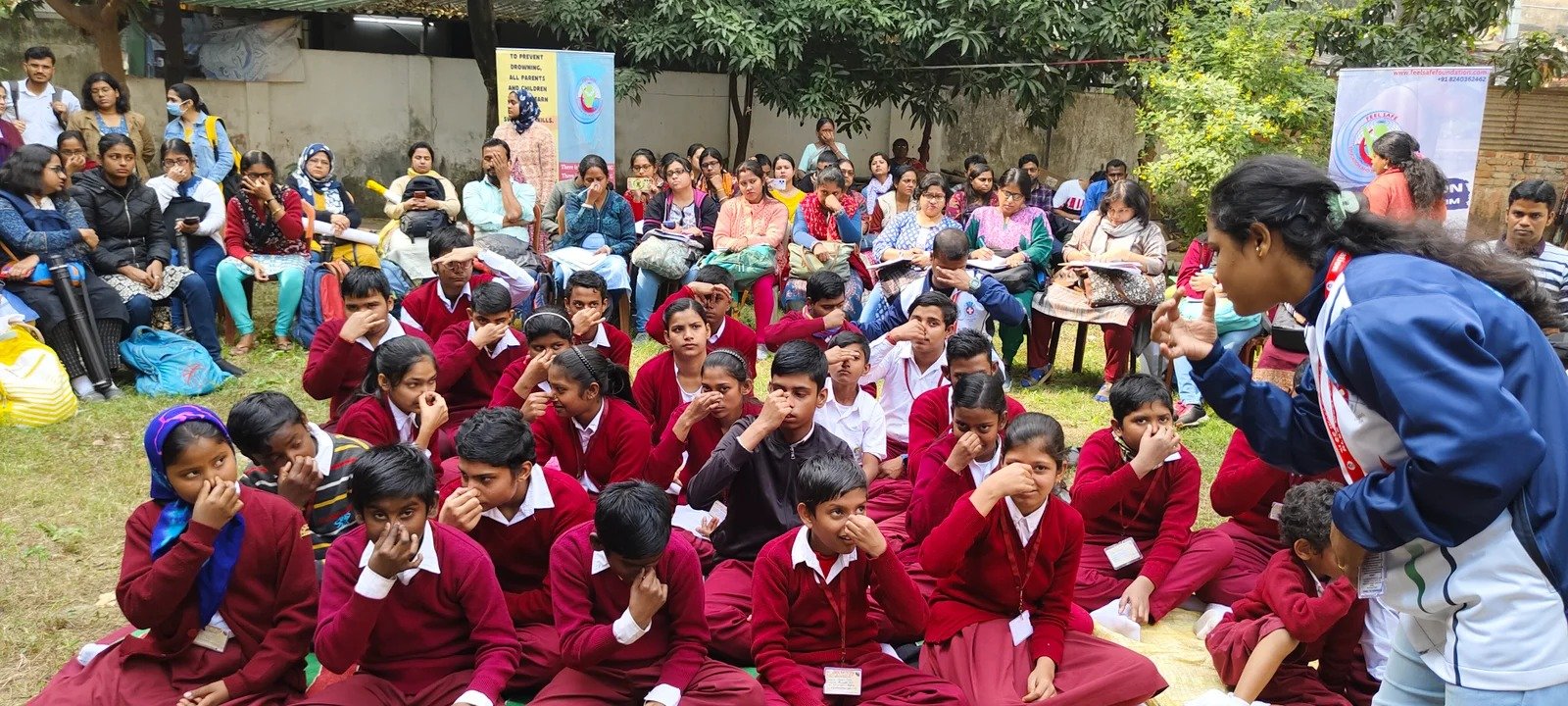
Participants learn through discussion, statistics, practical examples, awareness activities and community-based prevention exercises.
Clear explanations of drowning risks, prevention measures and safe emergency response.
Guided activities that reinforce supervision, hazard control and safer community behaviour.
Scenario-based discussions that help participants identify risk factors before an incident occurs.
Learn how to raise an alarm, use safer rescue options and call professional responders quickly.
Join the Community Prevention Programs program or contact us for customized rescue and safety training for schools, clubs, institutions, workplaces and community groups.